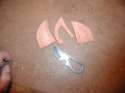
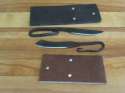
Hi all,<br><br>This is my first post on this forum. I have been lurking for quite a while, and I am constantly impressed with the amount of knowledge and experience here.<br><br>I am a big khukuri fan, so I want to to throw in my two annas. I have a bit of a collection of them (some of them are quite old, going back as far as the 1820s), and it is still possible to find good examples still being made today. I am not a fan of the CS versions, the handles aren't very robust or comfortable for extended chopping, and I don't think stainless steel suits these blades very well. The best khukuries are made of good old 1095 (these days old truck springs are recycled into khuk blades), and are zone tempered so that the "sweet spot" chopping area is the hardest, followed by the tip, the area near the notch (called the "cho"), and the spine which is normally dead soft. The scabbard normally carries two additional blades - a little sharp knife called a "karda", and an unsharpened blade called the "chakmak". The chakmak should be tempered harder than the main blade, and is used to steel any dings out of it. Sometimes the spine of the chakmak is cut like a file, and can be used with a flint to strike sparks. The CS kukri is a copy of the most common khukuri (refered to by khukuri fans as the M43) issued to Gurkha troops and other divisions attached to the 14th Army who fought in Burma during WWII. A classic blade shape and very well suited to it's task, but IMO the CS khukuri is not the best example.<br><br>The shape of khukuri blades vary depending on where they were made. The Rai and Limbu people of eastern Nepal tend to make thinner faster blades called sirupatis which make awesome weapons. As a generalisation, the further west you go, the blades are thicker and more of the weight is concentrated toward the tip.<br><br>Personally, I always keep an 18" sirupati in my BOB. Though it is a lighter blade than most and thin enough to gut a fish, it is still thick enough for chopping firewood, or cutting branched to make a pole bed. There is a very good manufacturer in Kathmandhu who seels through an agent in the US. I am not in any way associated with the manufacturer or agent, but if anyone is interested I will be happy to post contact details here (if that is OK with the administrator).<br><br>Cheers,<br><br>Gary.


 Previous Topic
 Index
Index